Our Mother’s passion for the Church hymns was remarkable. She knew them all by heart. When we learn that there are about 150 important hymns, in addition to countless short ones, we realise how much she loved them and was able to understand and absorb the minute details of their different tunes. Each hymn or chant has its own rhythm and deep special meanings. Each one is intended to evoke its own sublime and inimitable spiritual effect; for its music is “entirely divested of every earthly sensation.”
Mother’s great talent in knowing all of these hymns was made plain in that she did not forget any of them until the last moments of her life; she never confused any one of the hymns with any other. Although her many illnesses weakened her body, her vigorous spirit helped her sing these hymns in great joy at times when she was hardly able to breathe. Thus whatever is spiritual retains the power of the spirit’s immortality.
In 1926, Ernest Newlandsmith, a musicologist who had studied violin at the Royal Academy of Music in London, visited Egypt. He listened to the Coptic hymns and had the Coptic musical notation transcribed. Rewriting the Coptic music in Wester notation was a means of recoding and preserving this great heritage for posterity. He was impressed by its depth and spiritual power. He remarked, “Coptic music is great and may be called one of the seven wonders of the world; and, indeed, if a Caruso filled with the spirit of God, were to sing some of the Coptic themes in the form of a great oratorio, it would be enough to rekindle Christendom.*
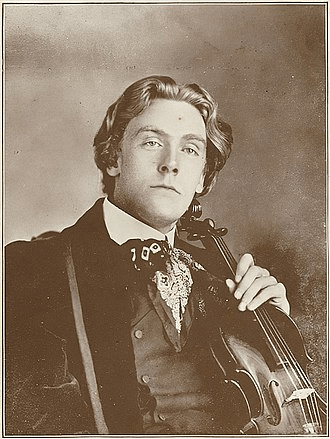
Ernest Newlandsmith’s valuable remarks indicate how the Coptic chant is distinguished from the hymns of other churches. He explained that the main concern of those who wrote the music of these hymns was to express their meaning with great spiritual sensation: the vocalising, the definite rhythmic pulse and melismata of these tunes submit to the spiritual sensation in order to express the meaning only. Hence they are exactly like the words that, in a prayer, reflect the feelings of the heart.
The power and originality of the Coptic hymns stem from the fact that they were written as early as the Apostolic Age, the age of the flowing of unlimited talents. Their tunes were preserved with all their distinctive rhythms and vocalisation. These chants, which were kept by the tradition and passed on from one generation to another, are now regarded as one of the great living treasures of the Church.
Amazingly Mother learnt most of these hymns by heart before joining the convent when she was still very young. God endowed her with a fervent and discerning spirit that soared up to the depth of heavens and divine love. With her sensitive spirit, she could hear the praising and glorification of the heavenly hosts and taste the deep spiritual meaning reflected in these hymns. They expressed her heart’s overflowing feelings of love and glorification towards the greatness of the Lord who surpasses praise and glorification.
Besides, the Lord bestowed on her a beautiful spiritual vision. Its beauty lay not in its sweetness or in her performance, but rather in its power, exaltedness of spirit and purity of heart. From her youth, she received these hymns in their original form from very distinguished Mu’allims or cantors. They were impressed by her ability to understand and memorise these hymns from the first hearing! This is not surprising because she used to listen to each hymn with all her senses, with an alert heart and mind. Thus she was able to grasp accurately the genuine musical and spiritual meaning behind the various rhythms of the hymn tune, rhythms fitted to the meaning of the words. She was even able to decide if there was something missing or extra in a certain tune and to say if this hymn was in its original form or certain additions had been added to it and to mention these additions!
That is why Mother was very famous among the great cantors of the Coptic Church. When some of them grew old and were afraid that these hymns would be lost, they would go to Mother and review them with her to make sure that they were correct. She used to be very happy with these meetings. She would venerate these cantors and regard them as keepers of the treasures of the Church. She used to encourage them to record all the hymns that they knew in order to keep this heritage for the future generations.
Among the distinguished people who had several meetings with Mother was Professor Ragheb Moftah (1898 – 2001), the head of the Department of Hymns in the Institute of Coptic Studies. He met her while carrying out some research into rewriting the music of the hymns into Western notations. He had to see her because of her fame for understanding and knowing by heart these hymns. Besides, her opinion was valuable and appreciated in this field.

Mother was very much keen on teaching us the hymns and the Psalmody herself. She used to explain to us the deep meaning behind the various rhythms of every tune. Thus she nurtured us from this ever living heritage. She used to be very happy when we mastered any hymn. She would say joyfully, “I used to say it alone. Now your voices have joined mine in praising God who deserves all glory and dignity. Praising is the one work that we can do on earth and continue in heaven. Every work and everything will stop and come to an end there, except glorifying and praising God because this is the language of the angels.”
‘Blessed are the people who know the joyful sound! They walk, O Lord, in the light of Your countenance. In Your name they rejoice all day long, and in Your righteousness they are exalted” (Psalm 89: 15-16).
Our ancient Church offers praise to the immortal God, the Unlimited One who abandoned His Throne carried by the Cherubim, to dwell in our hearts. He became Man to exalt us and raise us to Him. Our Church also glorifies His Mother, the Virgin who, when the fullness of time had come, gave birth to the One who is not limited by time. It also praises its members who preceded us to the Triumphant Church in heaven because we believe that the Church in heaven and that on earth are one and the same.
If praise links us with heaven and reveals the work of God for man, then we have to make every moment one of praise. Let us make it a moment of opening our minds and hearts to the work of God regardless of what we are doing. This is what we learned from our dear Mother, Mother Erene, whose spirit always joined the heavenly hosts in praising and glorifying the Lord before the heavenly Throne.
Ref: Mother Erene – A torch of love dazzling in the Coptic monastic life (book 6), p. 42 – 45

 The Art of Orthodoxy